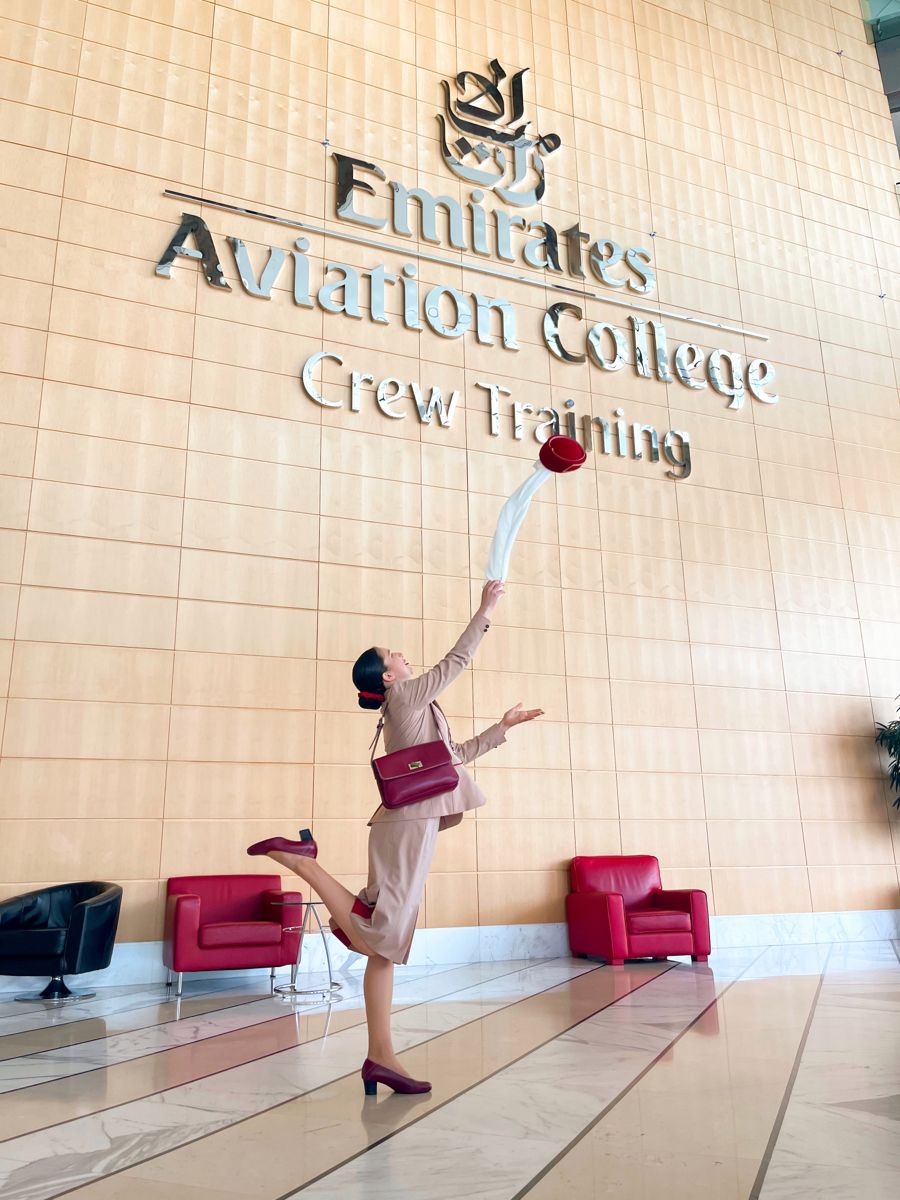
“Probably service, smiling and looking good in the uniform?”
Not quite.😄
Training at Emirates’ Training College is much more serious than that.
And there’s one important thing to keep in mind: all training is conducted in English. So you need to be ready not only for a huge amount of new information, but also for a lot of professional English vocabulary — especially in areas like Medical.
We’re continuing to share the real experience of an Emirates cabin crew member and taking a closer look at what future crew members actually study during those two months.
🚨1. Safety
This is the biggest and most important part of the training — and where the training starts. A significant amount of time is dedicated to it.
You’ll learn what to do:
• in case of an onboard fire;
• during an emergency landing;
• in the event of decompression;
• during an evacuation.
You’ll also learn how to operate aircraft doors in different modes, use emergency equipment, fight fires and evacuate passengers.
And it’s not just theory.
There are practical exercises involving real fire, and emergency procedures are practised over and over again until they become almost automatic.
Because in a real emergency, there won’t be time to stop and think about what to do.
🩺2. Medical — First Aid
For our interviewee, this was actually the most challenging part of the training.
One of the reasons was the huge amount of new medical vocabulary, which made it difficult to fully understand the material at first.
You’ll learn how to:
• perform CPR;
• use a defibrillator;
• assist with choking, fainting and bleeding;
• deal with different medical situations on board.
And yes, the training even covers situations such as childbirth on board.😬
🍽️3. Service
The Service training lasts two weeks.
This is where you learn how to:
• serve food and drinks correctly;
• communicate with passengers;
• deal with difficult situations;
• follow Emirates’ service standards.
And service is practised almost exactly like it would be during a real flight.
During the training, colleagues are split into two groups: one group plays the passengers, while the other acts as the crew.
You actually get food trays and practise the entire service process.
According to our interviewee, this was her favourite part of the training.😄
💄4. Grooming & Image
Emirates places a huge emphasis on appearance.
You’ll learn:
• how to present yourself;
• how to do your makeup;
• how to style your hair;
• how to wear the uniform correctly.
And yes, it’s taken very seriously because cabin crew are the face of the airline.
In fact, grooming checks start practically from the moment you enter the college.
As soon as you walk in and open the doors, specially trained staff can already notice your appearance and give you feedback — what needs adjusting, what’s missing, and so on.
✈️5. Aviation Theory
This is where you start getting a bigger picture of how everything works.
You’ll study:
• different aircraft types;
• areas of responsibility;
• onboard procedures;
• crew roles and responsibilities;
• aviation safety.
So this part is more about understanding how everything works together on board.
📑And yes, there are exams. Lots of them.
Throughout the training, you’ll constantly have both theory and practical exams.
The training journey roughly looks like:
Safety → Medical → Aviation Safety & Theory → Service
And knowing the material isn’t enough — you need to be able to apply it in practice.
📱And one more important thing
During training, actively posting about your work on social media is not allowed.
This is related to the company’s social media policy: during this period, your main focus should be on your training.
It’s also recommended to avoid posting content in uniform or directly associating yourself with the company on social media until you’ve completed your probation period.
So, those two months are definitely not just about getting a beautiful uniform and starting a new
career.
They’re an intensive training period where future cabin crew members have to learn safety procedures, first aid, aviation theory and service — and then put all that knowledge into practice.
And after that comes the next part of the journey:
actual flying.✈️